Optical Design
The optical system is the foundation of endoscopic imaging performance.
- Viewing direction design
- Field of view optimization
- Lens architecture development
- Illumination path integration
- Distortion and resolution optimization
Disposable Endoscopic Imaging Systems
Transforming clinical requirements into manufacturable medical devices. We combine optical engineering, imaging system integration, mechanical design, and manufacturing expertise to develop high-performance disposable endoscopic solutions.
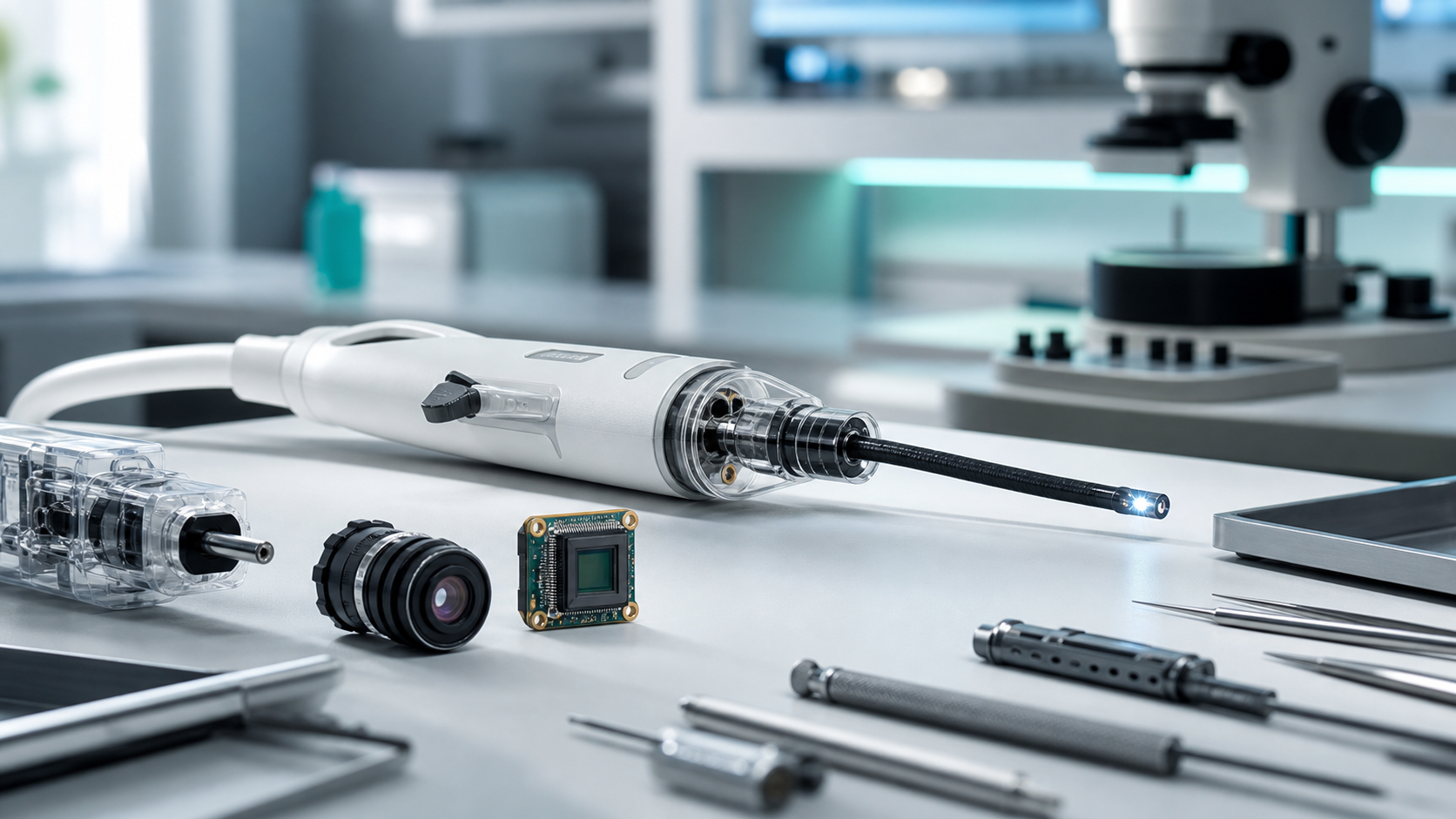
For global medical device companies, the right engineering partner needs to understand the full endoscopic system, not just component supply.
A structured engineering path helps reduce uncertainty before it becomes a manufacturing problem.
Image quality depends on how optics, sensors, illumination, mechanics, assembly, and manufacturing constraints work together.
The optical system is the foundation of endoscopic imaging performance.
Image quality comes from the interaction between optics, sensor architecture, and image processing.
The distal tip is where optical, electrical, and mechanical systems converge.
Reliable small-diameter systems require balancing performance, manufacturability, and cost.
Illumination quality is essential for clinical visualization.
Engineering decisions are made with production scalability in mind.
Verification connects engineering assumptions with real product performance, helping teams validate optical quality, mechanical reliability, environmental durability, and manufacturing processes.
Whether you are developing a new disposable arthroscope or improving an existing imaging platform, our engineering team is ready to support your project.
Talk With Our Technical Experts